Header/Navigation Bar/Social Media Icons

Monday, 25 July 2016

ABA: The Building Blocks of Teaching


If you teach Special Education, or have ever had a student with Autism in your class, then you most likely have heard the term ABA.  But do you really know what ABA is?   In my position, I train and consult to a lot of EAs and teachers and it surprises me how little they really know about ABA.  I mean, after all, ABA is one of the most effective teaching methods for students with ASD.  But, besides that ABA principles are really just good teaching practices, period!  Every teacher uses some form of ABA in their classrooms, whether they know it or not.  So today I'd like to take a closer look at what ABA is.


ABA is the only therapy with more than 30 years of research proving its effectiveness for children with Autism and other developmental disorders.


ABA, or Applied Behaviour Analysis therapy, is the science of human behaviour.  It is the process of systematically applying interventions based upon the principles of learning theory to improve socially significant behaviours to a meaningful degree.   "Socially significant behaviors" include reading, academics, social skills, communication, and adaptive living skills. Adaptive living skills include gross and fine motor skills, eating and food preparation, toileting, dressing, personal self-care, domestic skills, time and punctuality, money and value, home and community orientation, and work skills.
Over the past 30 years, several thousand published research studies have documented the effectiveness of ABA across a wide range of:

  • populations (children and adults with mental illness, developmental disabilities and learning disorders)
  • interventionists (parents, teachers and staff)
  • settings (schools, homes, institutions, group homes, hospitals and business offices), and
  • behaviors (language; social, academic, leisure and functional life skills; aggression, self-injury, oppositional and stereotyped behaviors)

ABA treatment can include any of several established teaching tools, including discrete trial training, natural environment teaching, and the Floortime model.

Discrete trial teaching

The most common and distinguishing type of intervention based on applied behavior analysis is discrete trial teaching. It is what people most often think of when you say "ABA" or "Lovaas method." It is a mistake, however, to think of an ABA program as just DT teaching. Lovaas (among others) notes very clearly that a behavioral program is a comprehensive intervention, carried out, as much as possible, in every setting, every available moment. The skills that are taught so efficiently in discrete trial drills must be practiced and generalized in natural settings.


A discrete trial is a single cycle of a behaviorally-based instruction routine. A particular trial may be repeated several times in succession, several times a day, over several days (or even longer) until the skill is mastered. There are four parts, and an optional fifth, to a discrete trial.
  • the discriminative stimulus (SD)-- the instruction or environmental cue to which the teacher would like the child to respond
  • the prompting stimulus (SP)-- a prompt or cue from the teacher to help the child respond correctly (optional)
  • the response (R)-- the skill or behavior that is the target of the instruction, or a portion thereof
  • the reinforcing stimulus (SR)-- a reward designed to motivate the child to respond and respond correctly
  • the inter-trial interval (ITI)-- a brief pause between consecutive trials


Essentially, this illustrates the order of a discrete trial. First comes the teacher's instruction (SD). If the teacher thinks the child may need some help responding correctly, she will give him a little prompt, cue, or model to help him out (SP). Then, either with help or without, the child gives some response to the instruction (R). If the child responds incorrectly she might correct him, and then give him another chance. If he responds correctly, or close to correctly, the teacher might give him some reward or praise to encourage him (SR). After that is completed, the teacher might want to pause for a bit before continuing, to let the child know that they have completed one set and have moved on to the next (ITI).

When I present workshops or provide trainings, I don't like to overload my audience.  The same applies here, so I am going to stop here and talk more about discrete trial training,  in my next blog post.  Since ABA and Discrete Trial Training are large topics to cover, I am going to break these concepts down into a series of blog posts.  I hope you found this introduction helpful and hope you will stop by next week for the second post in this series.

To help you get started with discrete trial training, I have made my DTT Colour Teaching Kit free for a limited time!  Click on the picture below to grab it for free while you can!


Until next time,


Friday, 22 July 2016

Friday Favourites!

With summer vacation in full swing, I have had lots of time to reflect.  Time to reflect on my teaching, my classroom, my blog and my TPT store.  I have neglected my poor little blog this past school year, but I am determined to change that starting now.  I am committing to myself, and to you, to write a blog post at least once a week.  In order to achieve this goal and not become bored, I am going to introduce some new series and participate in some linky parties. Today I am starting off a new series called "Friday Favourites".  At least, one Friday a month, I am going to post my 5 favourites for that month.  I am going to keep it fresh by mixing up the themes.  Some Fridays, it will be my favourite Pinterest Pins, some Fridays it will be my favourite blog posts, and some Fridays it will be my favourite TPT resources.  Some Fridays will have a theme, let's be honest, most Fridays will have a theme!  I love to organize by theme!!!   Whatever the theme, I promise you I will be sharing some amazing ideas, tips and resources.  To start off the series, today I am going to share 5 of my favourite TPT resources for back to school.


1)  Teaching Special Thinkers' Back to School Easy Art


I love these Easy Art kits!  It makes planning for art class so much easier!  Gabrielle includes the templates (which I like to laminate for easy re-use) and step by step visual instructions for the students to follow.  You can incorporate so many skills into these activities!  That's why they are a must have in my classroom.

2)  From Mrs. D's Corner, the Editable Parent Handbook


I love all of the information that is included in this handout and that I can edit it!  This is going to make so much easier to get all of the necessary information to my students' parents and they can just hang it on their fridge for easy access.  Plus it's so darn cute!!!


3)  Especially Education's Helpful Handouts for Special Education


I love the variety of handouts included in this resource!  Plus the pages for student information and phone logs are going to come in super handy!  There is a lot packed into this resource and the price is fantastic!  


4)  From Autism Adventures, the All About Me Interactive Book


This book is perfect for back to school and teaching/ reviewing students' personal information.  There's a ton included and it will be great for working on communication skills and self awareness.  This is definitely a must have for my students!


5)  The Cat Says Meow's Vocab Flip Books


I love that these books are made with real photos.  It's hard to find vocabulary cards that are made with photos that don't cost a fortune.  This is one of the few exceptions!  I also love the number of categories included.  This is going to make assessing and teaching vocabulary so much easier and better!

Thanks for stopping by for my first Friday Favourites post!  I hope you found this useful, but if you are still looking for some more resources for back to school, you can also hop over to my TPT store, where I also have some resources!  My Back to School Basic Skills Activity Pack and interactive books are already prepped for my classroom for the first day of school!  You can get them by clicking on the pics below!


If you have any must have resources for the beginning of the school year, I'd love to hear what they are!  Drop me a comment below!  And if you have any topics/themes for the Friday Favourites, or any other topic you would like to know more about, please let me know!  

Until next time,


Thursday, 19 May 2016

Cool Resources for the SPED Classroom


The end of the school year is fast approaching, and if you are like me, you may be already thinking of what you would like to do differently next year.  And if you have a classroom budget provided by your school board, you may also have money that you need to spend before the end of the school year.  If this is your situation, then you may want to consider adding these to your wishlist!


Five SPED Classroom Must-Haves

1.  Iris Photo Box Organizer 

I love having an organized classroom - it's makes daily life in the classroom so much easier!  Plus, I like my room to be neat and tidy.  I discovered these photo boxes this year and fell in love!  They make organizing flashcards and extra PECS so easy.   They come with 16 individual cases which are housed in the larger box.  I use my label maker to label each box and now we can easily find what we need in a hurry.  I got mine at Micheal's (make sure you have a coupon, they're a bit pricey), but you can also find them on Amazon.


2.  Classroom Magnetic Number and Letter Sets  

These sets from Lakeshore Learning are great for math and literacy centers.  They make it easy to create hands-on learning activities for your students.  And I love how the boxes are organized!  It makes easy for students to find the letters or numbers they need.


3.  Kitchen Scissors

If you use edible reinforcers in your classroom, then you are going to need a good pair of kitchen scissors to cut those candies in half or quarters.  We try to stretch our edible reinforcers and make them last by cutting them into smaller pieces.  This also reduces the amount of junk food our students eat on a daily basis.  These scissors have made cutting those hard candies, like Skittles so much easy! We use the Cuisinart X Series ones.  I got mine at Canadian Tire on sale, but you can also get them at places like Costco or Walmart.


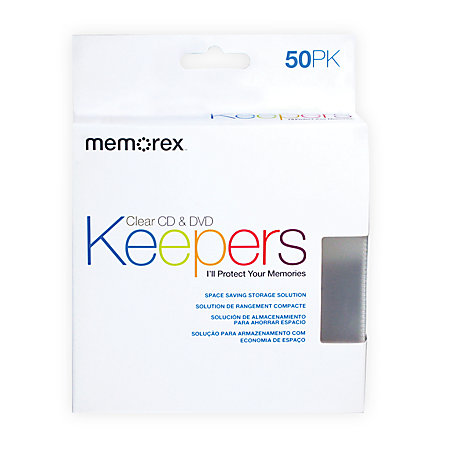
4.  Plastic CD/DVD Sleeves

I love using these for storing pieces for file folder games.   We used to use library pockets for this purpose, but after time, they would rip or the pieces would fall out.  We then switched to ziplock baggies, but found that our students had a difficult time opening these, and would often rip the bag to get the pieces out.  So then we tried Memorex plastic CD/DVD sleeves.  These are sturdy, have a flap that closes to keep the pieces inside and are easy to open.  But, this brand is a rather expensive option.  They cost about $10 for 50 sleeves.  So, I search Amazon to see if I could them for less and discovered a similar product, which cost $25 for 1000 sleeves.  The plastic on these ones isn't as thick as the Memorex brand, but they do hold up well and my students can open them easily.


5.  Thirty-One Oh Snap Pockets

If you are a teacher, then you may have heard of Thirty-One Gifts.  If you haven't, you should really check them out!  It's a direct sales company that sells cute and functional bags and organizing items.  My favourite teacher bags are from Thirty-One and one of my favourite classroom organizers is as well.  I love the Oh Snap Pockets because they are much more sturdy than other hanging pockets that I have bought from teacher stores.  The other nice feature is that you can snap them together eliminating the need for multiple hooks on your wall.  They have two versions, one that has a plain front (but you can add embroidered words) or one with a chalkboard front so you can label them with chalk and then change the label when you want.  I have both in my classroom and use them to store books, playdoh mats, play scripts and props, prepped art projects (we use Teaching Special Thinkers' Easy Art kits) and papers I need to file, or have handy.


Five Resources on My Wishlist

1.  Osmo

I was introduced to Osmo last year by a colleague and fellow tech geek.  He let me borrow his to test out with my students and while I loved the concept of incorporating manipulatives while using the iPad, they only offered one learning game at the time.  So, I didn't buy it.  Now, however, they have introduced 3 more games, including a drawing game, spelling and counting game, so it has moved onto my wishlist for next year.


2.  Touchtronic Letters and Numbers

Similar to Oslo, Touchtronic Letters and Numbers allows for the use of manipulatives when using apps on the iPad.  With these manipulatives, students can match letters or numbers, spell words, or make equations to solve by placing the manipulatives right on the screen of the iPad.  This is something that I know my students will love!


3.  Rubicoil Coil Binding Machine

This is the most expensive item on my wishlist, but I am convinced that it is worth the investment!  Most of the time, we use binder rings or the comb binding machine to assemble our interactive books or play scripts.  With the binder rings, we find that students sometimes have a hard time turning the pages and with the comb binding, the pages often come apart after use.  I know SPED teachers that have a rubicoil and love the durability of the coil binding.  I love how professional it makes their resources look and can't wait until mine look like that!


4.  Hokki Stool

I have a couple of students who are very wiggly and have a hard time sitting still during table tasks.  I know that they need to move, but because we don't have any flexible seating options that work for them, I really want to get a couple of Hokki stools.  I've asked around and teachers seem to love this brand the best.


5.  IKEA PS LĂ–MSK Swivel armchair

Sadly, I don't have a lot of space in my classroom for a sensory area.  So, I have use space wisely and choose sensory items that are smaller.  This chair is great as it doesn't take up a lot of room, but provides sensory feedback through the spinning motion and with the cover that can be closed, kiddos can close out the world when they need to.


What's on your wishlist?  I'd love to hear about any cool resources you have in your room or on your wishlist!  Leave me a comment below!

And don't forget to like the We Teach SPED Facebook page to find out about more awesome tips and resources!


Until next time,


Recommendations by Engageya